
“We have to produce more energy, and we have to get permitting done.” — Rep. Bob Latta
WASHINGTON — ICYMI, Citizens for Responsible Energy Solutions (CRES) named Rep. Bob Latta (R-Ohio) CRESponsible leader for the month of February. Each month, CRES highlights a member of Congress for their leadership on clean energy policy.
As part of this recognition, CRES President and CEO Heather Reams sat down with Rep. Latta in an exclusive interview to speak about urgent permitting reform legislation, the importance of tech neutrality in clean energy, and his leadership on the Energy and Commerce Committee.
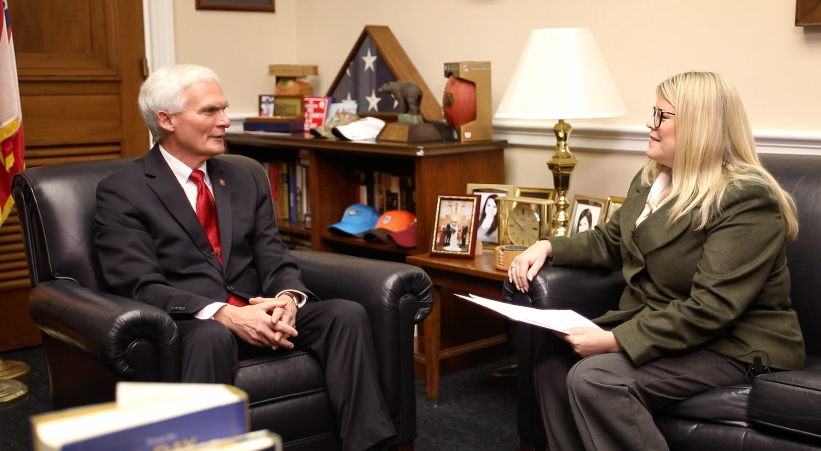
Click here to view the interview in full.
Read the full transcript below:
CRES PRESIDENT AND CEO HEATHER REAMS: Good morning. I’m Heather Reams and I am president and CEO of Citizens for Responsible Energy Solutions (CRES). And I am thrilled to be here with Congressman Bob Latta from Ohio’s fifth congressional district, who is also our responsible leader of the month.
REP. BOB LATTA: Thank you very much.
REAMS: Each month CRES recognizes one member who is leading clean energy initiatives in Congress, and this month we’re really proud to recognize you, Congressman. You are Chairman of the Energy Subcommittee within the House Energy and Commerce Committee. We’ve been following your work over the last Congress and your leadership, so thank you for being with us today.
LATTA: I really appreciate it.
REAMS: So, your long-term leadership in the energy space is notable and your efforts to strengthen America’s energy dominance is clearly there. In the second half of Congress, would you tell us some of your priorities as a leader on the Energy and Commerce Committee?
LATTA: Well, when we started this Congress, we had really two priorities. We have to produce more energy, and we had to get permitting done. So it’s kind of two things running parallel with each other and they’re both extremely important. If you bring up all the energy on the one side, but you can’t move it from point A to point B, it’s pretty much worthless. And on the other side, we know this, is that in the last several years, we’ve just watched an exponential growth and demand, especially on an electric grid. And we were flat lining for so many years and all of a sudden now what we’re seeing on a bar graph is that it’s going straight up. And so we also know that not only do we need to produce more, we now have another issue. We’re looking at about 115 gigawatts going offline. And at the same time, we need another 150 [gigawatts] on top. If you add them up, we’re down 275 gigawatts. So, the concern out there is we’re not going to have the power into the future unless we get something done now.
REAMS: Wow. With that demand going up—and you’re right, the kind of the steady energy needs over the years, I think we maybe got complacent—we don’t have to create more energy all the time, and now we’re needing to do that. So what are some ways that we’re able to bring more energy on the grid? And of course, maybe that’s a short-term problem and a long-term problem.
LATTA: Well, I think it’s multiple. First of all, back in 2008, as House Republicans, we put forth our policy of an all-of-the-above energy policy. So you think about all the different types of energy that are out there, and we’ve said the federal government shouldn’t pick winners and losers. It should be up to the market.
So, what do you do in the short term? Because again, when you look at this massive demand that we have, for one thing how do we squeeze more out of what we already have? That’s the first question. So, it’s working with the companies out there. We’ve had some great forums that we put together down here in the Rayburn [House building] that different companies from around the country could display what they’re doing to show how you might be able to get more energy out of what we already have.
So that’s one thing we have to be doing. But at the same time, we have to be thinking about upgrading all those utility lines out there. How are we going to do that? And the other question is, first of all, do we have the companies out there that can make it? And then also, do we have the raw materials needed in that supply chain? Then at the same time, we have to be making sure we’re passing the right laws and regulations that follow to make sure all this can be done.
I look back to the mid 1970s when we were told in this country, we had no more energy and we were told that we had no gas, we had no oil. And so we are where we are today, because of the right laws that were put in place, the regulations have followed, turning our entrepreneurs and innovators loose in this country. Now, on the natural gas side, we’re number one in the world. We’re number one. We can beat Russia. We can beat Saudi Arabia on any given day in oil production. So I think that we can do great things. And, also on the nuclear front. And that’s what we’re doing. I mean, there’s so many things we can do. It’s also when you think about our intermittent type powers to all of the others. So we can do it.
REAMS: It is exciting to think about America and how we’ve met the moment, the challenge, and how we are going to do that again. You are one of the leaders that is helping us get there.
You mentioned nuclear, and I know you have a passion for this too. So there’s been some retiring nuclear fleets, and then coming back online, and they’re not retiring. What’s your thinking about keeping nuclear—one, not retiring and then two, expanding nuclear?
LATTA: Well, the one thing is making sure as they work on the licenses, that these licenses are renewed into the future. We had a meeting not long ago with the NRC chair. Interesting enough, of the right. So we have a right at energy and a right at nuclear. So we have a right and a right—which do make a right.
And so, when you look on the nuclear side, thinking back, this is going on my 16th year on the Energy and Commerce Committee. If you had mentioned nuclear when I first got on the committee, it’d been like, you’re crazy. It’s all going to disappear. And where we are today is, first of all, we’re going to have to make sure we keep everything up and running.
Second, especially when you think about Palisades in Michigan and Three Mile Island and Pennsylvania, that we want to get those reactors back up and running. And then the next phase is what we worked on in the last Congress, making sure we had the fuel. Making sure it’s here and not coming from Russia or a source that might cut us off like we know the Russians have done in Europe with their natural gas. I’m a big believer in recycling spent nuclear rods. And we were told, “Oh, it’s going to be too expensive.” The French have been doing it for years. We have a company in this country right now that probably in the second quarter of this year, they might be able to start recycling rods. And with that, you’re looking at maybe a hundred to 150 years of fuel right now, just recycling. So there’s great things that can happen out there. So I’m very, very bullish where we can go.
REAMS: I’m loving how you’ve been really championing all the above, meet the moment with the energy we have. Are there future technologies—certainly talking about using our nuclear rods or recycling them. It’s actually something new and innovative. People have talked about fusion. What’s the role of government in helping these next technologies?
LATTA: Well, and again, I think it’s really making sure we have the right laws in place. If you go out there and say, “We’re not going to have any nuclear.” And pretty much if you go back like with the Carter Administration—it started in the Ford Administration—the Carter Administration said in 1977, we’re not going to recycle any rods. Well, of course, other countries do. So I think the big part of what we have to do, and this is what I always say, one of the great things about serving an Energy and Commerce Committee, because we have such broad jurisdiction that covers everything across this country—I always say this, when you sit up on that diocese, we’re looking over the horizon five to 10 years. And the reason I say five to 10 years, because when the innovators and the entrepreneurs come before us or we meet here in my office, they’re way ahead of us. And I always ask the question to a lot of people, “Are you where you thought you’d be five years ago?” I say, “No, we’re much farther ahead.” But again, make sure you have the right laws in place.
REAMS: Okay. So speaking of laws in place and maybe removing some or tweaking some, thinking about permitting reform, you mentioned the need for permitting. What are some of your goals? I mean, permitting seems to begin the in the eye of the beholder sometimes. So, how do you envision permitting reform allowing for more energy?
LATTA: Well, again, what we’ve seen happen in the past is it’s taken too long. And in some areas it’s being used as a tool to prevent something from ever happening. I’ll never forget, we had a hearing that it took seven years to get some electric polls put across federal land. Then somebody came up with a broad idea, “Hey, how about broadband deployment?” That’s also our committee. If they told them, “It going to take us seven more years because you have to do the exact thing over what you already had done.” So it’s really looking at our permitting that we do in this country because we’re in a race and that race really boils down to communist China. They don’t worry about it. They just do it. So we want to make sure we do things right, but at the same time, we can’t have it where it’s just as a block. They say, “We’re never going to get it done.” I tell folks, this is a race between two countries and there is no second place medal. You’re either going to win it or you’re going to lose it.
REAMS: Right. That’s right. And then so you’re saying that China could build. The permitting is not an issue really there—they build. We certainly have strong environmental laws that protect our environment, but I don’t think Republicans are suggesting to remove those.
LATTA: No, we just want to make sure that we can move things along. It’s just like we had hearings last year, or in the last Congress, when we were dealing with hydro, especially out in Washington state with dams. It’s just like, okay, we might have to build a dam, but then, okay, how do the fish swim upstream? But some people say we’re just stopping everything. It’s like, no, we can always find solutions, but if you put the block up saying at first we’re not going to do anything, that’s a problem. And again, it’s making sure that all rights are preserved out there, but you have a kind of a due process of how we’re going to operate.
REAMS So, if we’re going to have permitting reform, is it fair to assume we’re going to have more energy?
LATTA: Well, I absolutely believe we have to because again, permitting runs, as I said earlier, parallel with the production of the energy. If you don’t move it from point A to point B, it’s worthless. And we have two committees of jurisdiction here. We have Natural Resources [Committee], Bruce Westerman, he’s doing doing a great job with what they have to do in their committee. But we have to do our job in the Energy and Commerce Committee because again, that permitting is going to help us move that energy and produce more energy. But if we don’t get the permitting done, I’m fearful of what the future is going to hold for this country.
REAMS: Wow. So we’re in a, I guess 2026 and midterm elections are coming up. Many say things don’t get done in an election year. It sounds like you’re pretty bullish on permitting reform. Do you think we’ll get it done before the midterms?
LATTA: A lot of times you always think it’s the year prior you get into late October, November, but I think we’re still producing and work is coming out of the Energy and Commerce Committee. I’m confident we can get it done, but as we move it forward, then it’s the floor schedule. We have to make sure that there’s a floor schedule. And then we have to be working with our counterparts over in the Senate because at the same time, they’ve got to know that this is coming because we can do all of our work, but it gets over there. It’s not like one of these things anymore where they say, “Well, we’ll get it done next Congress or the Congress after that. “
LATTA: As I said earlier, there’s no second place here. The Communist Chinese, when they built one of their new dams, they just moved everybody away. They just like, “That’s it. You’re all out. ” And so if they need it, they do it. They’re looking at well over a hundred plus coal-fired plants. At the same time, what are we doing? We’re taking that offline. So, this is why it’s important we get our permitting done.
REAMS: So, what’s at stake when we think about AI? The energy demand is going up because of the use of AI. We kind of talk about AI, what it is, but it uses a lot of energy, uses a lot of water. There’s NIMBYism about the data centers, but isn’t there a promise of AI and how it can help improve our lives? I don’t know if the Committee has looked at that.
LATTA: Well, you know that’s another area that we have jurisdiction is on AI. And so we go starting with the data centers out there. Again, when you think about the state regulations and the permitting, that’s out of our purview. That’s something that happens back home.
So, on our end though, as I said, you look at the bar graph and it’s going up. So, when you look at the major users out there, the data centers are huge users of power. And we also know this, they not only have their primary, they have to have two backups.
So, I mean, there’s a huge amount. So, I’ve got a company that has a couple of plants in my district that they don’t make the product in my district, but they’ve come up with something I call, it’s almost like an antifreeze for your car. You can submerse—at the data centers—all of the units into this, so you don’t have to have as much water and it keeps them cooler. And so you don’t have to generate much energy to keep this all cool.
The other thing is, is that when we look at it, if you’re thinking about, if you get to areas that might have gas lines, you might be able to site farther away from where people reside. But at the same time, if you’re looking at small modular reactors, you’re looking at some of them using a gigawatt. So, you could take maybe four small modulars, have them behind the meter, and you have it right there. So, you can solve a lot of issues, but it’s, again, to me, everything’s solvable. I always believe this. If you know what the problem is, you can fix it. If you don’t even know you have a problem, you’re in trouble.
REAMS: That’s for sure.
This final question for you in thinking about your district and the Fifth District of Ohio and your leadership on the committee, the Energy and Commerce Committee, does it intersect? When I think about Ohio, I think about building. I think about industry. I think about being an engine for the country. Do you think about your district that way? And does that really reflect your work on the committee?
LATTA: Well, to get on the Energy and Commerce committee, we always say it’s the best committee in Congress. You have to run a race to get on.
REAMS: Oh, okay.
LATTA: So, you have to tell [them] why you believe that you should be on the committee. It’s not like, “Gee, put me on and you’re on.” I remember when I went on, my district and has about 86,000 manufacturing jobs. The way I say it is, if I don’t have affordable energy, we’re out of luck. You can have energy, but if it’s too expensive, you can’t compete. And I just saw an article this morning in the Wall Street Journal that China has now surpassed Japan and auto sales abroad and export—over 7.1 million.
If we’re going to compete in this country, we have to have energy that is affordable so they can go out. The other side of my district is also very unique. I have the largest farm income producing district in Ohio.
So, I’ve got to have energy not only for, thinking about when farmers are heading out to the fields for planting season or for harvest, for the fuel—it’s all the other types of products that are manufactured from oil or natural gas that they put on their fields.
So, you got to keep the price down because the margins out there for farmers right now are slim to none. And I know that because my mom came from a farming background. My wife’s family, they’ve been farming on the same farm since 1835. So, you know what’s going on out there. And so, I look at my district, and I tell everybody, if I don’t have affordable energy, we’re out of luck.
REAMS: So, energy is king, it sounds like where you are.
LATTA: Absolutely.
REAMS: Absolutely. Well, Congressman and chairman, thank you so much for spending time with us and telling us about energy.
LATTA: Well, thank you so much.
REAMS: We’re going to be working hard alongside you and your team to help that permitting get over the finish line, both in the house and then we’ll do our part in the Senate as well. So, thank you so much.
LATTA: Really appreciate it. Thank you.