
“The focus needs to be on making sure that we have the energy we need to meet the energy needs of the future, not on which sectors are winning out.” — Rep. Celeste Maloy
WASHINGTON — ICYMI, Citizens for Responsible Energy Solutions (CRES) named Rep. Celeste Maloy (R-Utah.) CRESponsible leader for the month of January. Each month, CRES highlights a member of Congress for their leadership on clean energy policy.
As part of this recognition, CRES President and CEO Heather Reams sat down with Rep. Maloy in an exclusive interview to speak about her vision for advancing innovative geothermal in rural Utah, her new appointment as Chairwoman to the Congressional Western Caucus and her efforts to drive commonsense permitting reform.
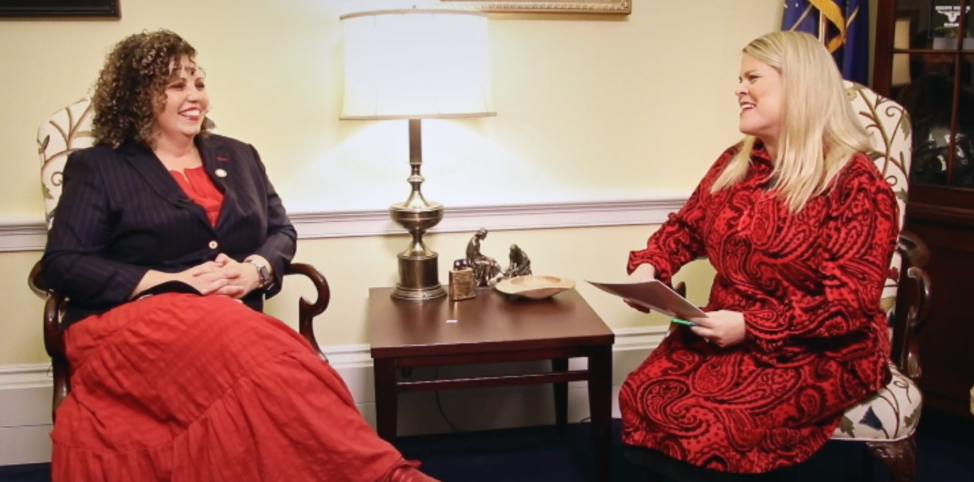
Click here to view the interview in full.
Read the full transcript below:
CRES President and CEO Heather Reams: Good afternoon. I’m Heather Reams, President and CEO of Citizens for Responsible Energy Solutions (CRES), and I’m thrilled to be here with Congresswoman Celeste Malloy of Utah’s second congressional district, who is our CRESsponsible Leader of the Month. Congratulations!
Rep. Celeste Maloy: Thank you.
Reams: Each month CRES recognizes one member who is leading clean energy initiatives in Congress, and this month we’re excited to recognize you. For one, I really want to highlight your work on next-gen geothermal. So welcome and thank you for joining us.
Maloy: Thank you.
Reams: Utah is becoming one of the hot places for geothermal. Why Utah and why geothermal?
Maloy: Yes, it’s a good question. Mostly because Utah has hot enough rocks for traditional geothermal. So, there’s a geothermal plant in Beaver County, Utah. The Blundell Plant has been operating for I think 40 years. We used to think that you had to be in a location with really hot rocks close to the surface to do geothermal. When we started exploring the idea that we may be able to do geothermal in other places, it made sense to start doing some of that research in Utah because we do have the hot rocks. We also have open space. It’s the geothermal research going on in Utah that I want to talk about is in the West desert where there’s room to do some experimenting. To put in multiple wells, and punch holes in the ground, and see what’s possible. It has to start somewhere and Utah’s a great place for that to start.
Reams: Fantastic. I was just thinking about the workforce that’s there too, because when I hear this, I think about a lot of jobs. Is that something that excites you?
Maloy: Absolutely. So, in a county like Beaver County, I think it’s got a population of about 6,000. So, creating a dozen good geothermal jobs makes a big impact on a county that size. It keeps a dozen families living in a rural area. It keeps the kids in the school, it keeps them shopping at the local grocery store and paying property taxes. That’s a big deal in the rural counties with the really small towns in my district.
Reams: That’s one of the great exciting things about geothermal is the ruralness of this, and it is not like you have to move to a city. You can stay right where you are and have the jobs in your backyard. It’s amazing.
Maloy: Yes, and they are good jobs with benefits that keep a family anchored for an entire generation.
Reams: Yes, it’s exciting. So geothermal often flies under the radar, but it’s getting better known. I keep wanting say “hot” – but it’s getting hotter and hotter.
Maloy: Just use the puns. We’re going to get “CRESponsible” to catch on and we’re going to talk about “geothermal being hot.” This is going to be great.
Reams: May as well – they write themselves. So why do you think geothermal? Like why now is geothermal and advanced geothermal taking off.
Maloy: Geothermal ticks all of the boxes we’re always trying to tick when it comes to energy. It’s renewable, it’s clean, it’s dispatchable, it’s base load. You can turn it up, you can turn it down, you can use it to supplement renewable energy. In fact, in the West desert, in my district, in Utah, in Beaver County, we have biogas and geothermal and solar and wind and hydro. We talk about all-of-the-above and we’re actually doing all-of-the-above. And there are limitations on most of those sources. On a dry year, it’s hard to do hydro. When the sun’s down, you’re not doing solar. If the wind’s not blowing or it’s blowing too hard, you’re not doing wind. But the rocks below the surface stay pretty darn consistent, and so geothermal is a solution to help make all those others actually workable.
Reams: So, you’ve got some bills in Congress that you want to talk about. I think it’s two of them. Is it two or one or one lead bill?
Maloy: I‘ve got a handful of them.
Reams: You’ve got a handful of bills. So, what are you trying to accomplish with legislation?
Maloy: So, we’ve got the Geothermal Parity Act and the Geo Act, and those are the two that are really focused on geothermal specifically to try to put it on a level playing field with other energy sources. We really do need to produce a lot more energy in the coming decades than we’re producing right now. And geothermal hasn’t had some of the advantages in permitting and even in financing that some of the other sources have had. So, we’re trying to put it on a level playing field so that even traditional oil and gas companies who want to get into geothermal can, instead of saying, ‘well, we have better advantages doing oil and gas than we do geothermal.’ They can just do both and find out which things make sense where and keep moving forward on producing energy. The focus needs to be on making sure that we have the energy we need to meet the energy needs of the future, not on which sectors are winning out.
Reams: Makes a lot of sense. And [are there] prospects for bipartisanship on your bills?
Maloy: I’m very hopeful that we can get bipartisanship. I am a co-chair of The Build America Caucus, which is focused on these kinds of issues. What do we need to be building in this country and what’s standing in the way of doing it? And that is a bipartisan caucus. It was actually started by Democrats and they invited me to join and I’m really excited that we’re working together on these infrastructure and energy problems that have been partisan in the past, but I think we’re ready to be bipartisan. We all recognize that we’ve got to be prepared for the future.
Reams: Well, I want to congratulate you on now being elected to be the Western Caucus Chair.
Maloy: Thank you.
Reams: And we’re talking about rural America and energy. This is really kind of a core piece of the tenets of the Western Caucus talking about this. So, what does this mean to be leading the Western Caucus and being a representative of rural Utah and now being an all-of-the-above representative of energy?
Maloy: Yeah, I mean, everybody who knows me knows that rural issues are near and dear to my heart, and I have been a fan of Western Caucus a lot longer than I’ve been a member of Western Caucus. I always hoped I would get a chance to lead it someday. I didn’t want to do it quite this soon. I actually got to lead because of some tragic circumstances. We lost a good friend who was the chair. But I’m excited to take the things that Rep. Doug LaMalfa was doing and keep moving them forward. And you’re right; Western Caucus is very much aligned with the things we’re talking about here of making sure that we’re producing energy and that we’re creating jobs in rural areas. One of my colleagues pointed out to me that the reason Western Caucus is so important is that rural America will never have enough representation until all of rural America stands together. We just don’t have the votes in rural America alone, but we have rural scattered all over the country.
And all of those small town main streets need the same things. They need jobs, they need affordable energy, they need affordable housing. We’re tackling all those issues at the same time with Western Caucus and it unites people all across the country. We have members from New York and from the deep South and from the actual heart of the West and a lot of Californians – and sometimes California isn’t in step with the rest of the West. It’s a good vehicle for bringing people together and getting them focused on the issues that matter in all of our districts.
Reams: A lot of energy ends up being from rural America. If you’re thinking about all-of-the-above, your hydro is usually there, wind, solar, geo, all of it. And then even thinking about the mining that’s there – usually in rural America as well. So rural America has a massive role to play in making energy dominance for America.
Maloy: It’s where we have room for a lot of these projects. It’s also where I think we just have this work ethic of ‘we’re going to roll up our sleeves and figure out how to do this.’ I talked about Beaver County earlier. The FERVO project is there and it’s there because the FORGE project is there.
So, the University of Utah started the FORGE Project doing research on how to produce more geothermal energy in places we didn’t always think it was possible. And then that attracted the FERVO project that’s adapting oil and gas drilling technology to geothermal technology to figure out how we can have a really small above ground footprint, but a large below ground reach. And sometimes the barrier to geothermal is that it’s going to take up space in places that don’t have space. Figuring out how to do it, like we do oil and gas, where there’s not much above ground, but you’ve got a large reach below ground, opens up places that aren’t like the rural areas in the west.
So, we have the space to do the experiments. We have the people who are willing to go out and try things. Then once we develop those technologies, we can sell them to other parts of the country and other parts of the world where being energy dependent makes the world a less safe place. I mean, think some of our Asian partners, they’re close to China and they are reliant on either China or Russia for a lot of their energy needs. If they can have a small above ground footprint, because Asian countries don’t tend to have a lot of space, but then they can produce their own energy and it’s below ground where it’s defensible and not vulnerable, then that makes a big difference in geopolitics when these countries can produce their own energy. That’s something that we have the ability to do the research and development on and then export those technologies.
Reams: Right there in Utah.
Maloy: Right in Utah.
Reams: Utah wants to be the leader on so many things. I feel like this and geothermal might be just an excellent place for it to be. You said the [benefit in] space, but really the technology and the hard work ethic that I know so many of my friends from Utah have. I can only imagine. It’s pretty exciting to think about solving world problems right there in Utah and starting there.
Maloy: It is! And at the same time, we’re solving world problems, we’re creating jobs where we really need them and keeping our rural areas economically sound and making it so kids don’t have to move away when they grow up. They can stay there and have a job. I don’t know how many birds we’re killing now with that stone, but it’s more than two.
Reams: That’s for sure. Well, now we have permitting reform that’s being talked about a lot. A couple of bills passed out of the House, and the Senate is considering taking that up. What is your thinking about permitting and what needs to get done?
Maloy: All of it, all of it. I spent a lot of time thinking and talking about permitting reform because it’s so essential to everything we do. My first year I was in Congress, I was on the Transportation and Infrastructure Committee, and we talked all the time about projects that everybody agrees on. Things that need to get done, but we have such an onerous permitting problem now that we are taking way too much time and way too much money to build projects that we know how to build. I spend a lot of my time on the Natural Resources Committee now, and we have things we need to do like active forest management, but we have these permitting processes you have to get through. And the example I always use is that we know how to build bridges. Bridge technology is not cutting edge anymore, but in order to build a bridge, you have to go through so many years of studying and if it takes too long, those studies go stale and you have to start over. And we spend so much money on that process that the cost of the bridge is sometimes two or three times what it should have been. We could have built two or three bridges with the same amount of money and that doesn’t make sense.
So, what I’m trying to work with my colleagues to get done is make sure that we have permitting that makes sense. I say all the time, we can make good environmental decisions in a lot less time and with a lot less money than we’re doing it now. And if we can take everything we learned from the first bridge and apply it to the second bridge and then only study the things that are different about the second bridge and speed that up, we’re still building a good sound bridge. We’re still making good environmental decisions, but we’re making those dollars go farther. That’s good for everybody.
Reams: Yeah, that’s good for everybody. It seems like everyone wants permitting reform. We’ve just got to make it happen so you can count on CRES to be behind you and helping to make that a reality.
I want to go back to Utah in thinking about being a hub for energy technologies, geothermal. Is there anything else in Utah that’s exciting you that’s happening in the state that’s worth mentioning here?
Maloy: Yes, we have a lot of things happening in the state. I think we’re a good testing ground for things like permitting reform. Utah’s a state where we’re very practical. We love our natural resources, we want to protect our natural resources. We also want infrastructure. And I think we’re uniquely positioned to lead the way in how we can do permitting reform, energy production, all of these things, do it well and pilot these things–show that we can make good environmental decisions in a lot less time. We can produce energy from the resources we have. We can produce critical minerals in a way that’s environmentally responsible. And that’s another one of those things like energy, that if we’re doing it here, it keeps the world safer. If we’re dependent for those things on other countries, especially other countries that are not friendly to us, then that dependence alone makes the world less stable and keeps us in a position where we’re always just right on the edge of something falling apart. But when we can develop technologies here, we can export them, we can apply them at home, and it just keeps everybody stable.
Reams: And Utah is an absolutely beautiful state.
Maloy: Yes.
Reams: So, it feels like there’s a balance between protecting the environment but also helping to produce progress, whatever that looks like, energy or technology, or tomorrow’s technology. That balance. I always find that Utahns care so much about protecting the environment. And it seems like when you start talking about energy production, people feel like you have to sacrifice the environment.
Maloy: Yes, I think some of that attitude comes from how Utah was settled. We have this sort of hearty pioneer spirit, and it was settled by families who were coming and planning on being there for a long time. And so there was an attitude of we’re going to take these resources and use them for our benefits so that we can survive here, but we’re going to use them in a way that our grandchildren and our great-grandchildren and our great-great-grandchildren will be here for centuries to come. And that hasn’t really gone away. We’ve still got a lot of that work ethic and even the long-term planning mentality in Utah where we want to develop our resources, but we want to develop them so they’re there for a long time. Which helps with this problem you talked about. Sometimes there’s an assumption that if you’re going to develop a resource, you’re going to destroy it. But we came to a place with very little water, and very few people thought it was habitable, and we decided we were going to be there for a long, long time. And I think that shapes our attitudes towards our natural resources.
Reams: Utah, breaking new ground, doing it differently, but doing it wonderfully at the same time.
Maloy: Well, even our state song says: “Utah, people working together.” And that’s what we do.
Reams: It all ties together. Well, congratulations on both your chairmanship of the Western Caucus and for being a CRESponsible leader. Especially being a CRESponsible leader.
Maloy: We’re going to solve all these problems “CRESponsibly,” and we’re going to make geothermal “hot.”
Reams: Well, thank you so much for being with us.
Maloy: Thank you.