
WASHINGTON — ICYMI, Citizens for Responsible Energy Solutions (CRES) Forum Founding President and Board Chair James Dozier sat down with New Hampshire Governor Kelly Ayotte to mark the 10th Annual National Clean Energy Week (NCEW). The interview, which premiered at NCEW’s Policymakers Symposium last week, reflected on how far energy policy has come since the first NCEW and what needs to come next.
Gov. Ayotte has been a part of NCEW since the very first year, when she helped kick off the inaugural week in 2017 with a policy conversation alongside then-Interior Secretary Ryan Zinke and then-Energy Secretary Rick Perry. Looking back on a decade of progress, Gov. Ayotte emphasizes her vision for a future where energy isn’t a partisan issue and urged Washington to pass permitting reform that keeps pace with new energy technologies.
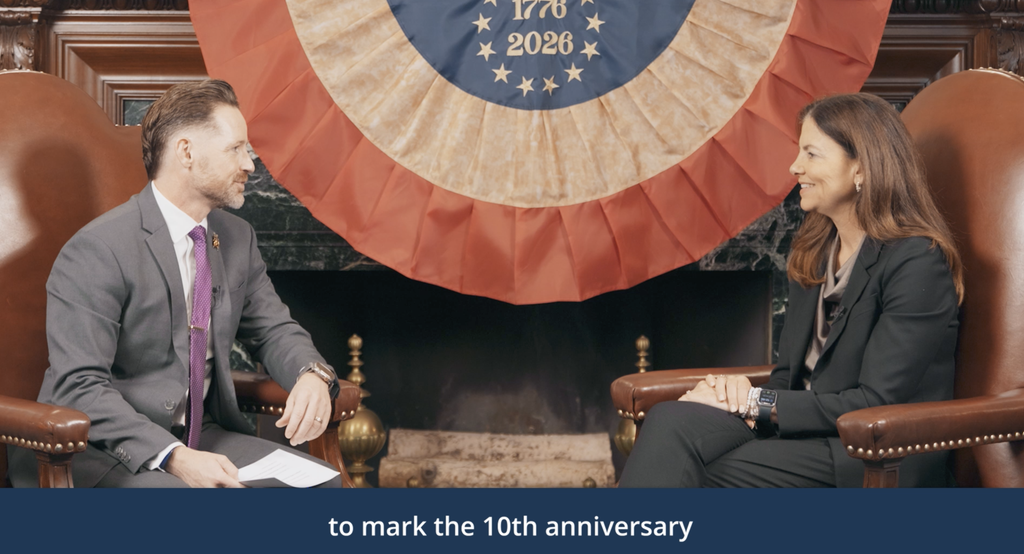
Click here to view the full video.
Read the full transcript below:
James Dozier: Governor Ayotte, thank you so much for taking the time to join us today to mark the 10th anniversary of National Clean Energy Week. I can’t believe that it’s been a decade since you joined us for the first Clean Energy Week in D.C. And over that decade, you’ve participated in so many different capacities. You’ve moderated panel discussions, you’ve keynoted, and even now as governor, you’ve issued proclamations recognizing NCEW. So, as we think back to that first year when you helped us kick this off in 2017 with a really important policy conversation with Interior Secretary Zinke and Energy Secretary Perry, what did you believe was possible on energy policy and how does the current policy climate compare to where you thought we’d be today?
Governor Ayotte: Yeah, I can’t believe it’s 10 years, James, and Clean Energy Week is so important, that we have it to bring that conversation forward, both sides of the aisle on common sense energy policy that not only makes sure that we have affordable energy for the American people, but we’re also conserving and protecting our environment. So, I think it’s wonderful that we’re in 10 years and really this week has accomplished a lot. It’s brought people together for important discussions, discussions on how we could improve permitting, discussions on how both sides of the aisle can work together for an-all-the-above energy policy. And really, I think the people that attend this conference, whether it’s the advocates or whether it’s the policymakers or just citizens who are interested in policy, always learn something and take something away from this conference. And we’re also using it as a catalyst for good policy in Washington.
I think as I look back at 10 years, there’s been a lot of progress made, but we know that there’s a lot more we can do, right? To make sure that we are producing abundant energy in this country and we’re doing it in the cleanest way possible.
Dozier: I love how you framed that. And throughout your public service career to other policymakers, to your constituents, even to myself personally, you constantly remind me that we have to balance preserving a strong economy, maximizing all of our energy resources and leaving a healthier environment to the next generation. I’m just curious about what makes the New Hampshire approach so special and what can other policymakers, other states, our audience back in D.C., what can they learn about the New Hampshire approach to balancing all three?
Ayotte: Yeah, it’s really interesting because you and I have had these conversations over the years where I’m a conservative and if you’re a conservative, you’re for conserving everything. So that means abundant energy, but also conserving what makes, for example, my state, New Hampshire is such a gorgeous state, really the natural beauty from the lakes, the forests, the mountains, the sea coast, we have it all in New Hampshire. And it’s so important that we have that balanced conversation, and what I think Washington, having served in Washington and now serving as a governor, could learn from this is that we’re very pragmatic, I think in New Hampshire. I think we take an approach that can be applied, one where we have an all-of-the-above energy policy. We don’t always follow what our neighbors do. We think about what is the best for New Hampshire, for our rate payers and for our environment as a whole.
So, I think that that’s that balanced approach. But the other thing I think that Washington could take from a New Hampshire approach is that we bring everyone around the table. We can get both; we have a massive legislature, right? 400 representatives. And to get people around the table on good policy and to get things done, like I’ll give you an example, this last session we’ve wanted to lean in very much on new nuclear technologies. You know, SMRs, the small reactors. And so, our legislature has been, I think very on a bipartisan basis aggressive in saying we’re open to this. We want to pass policies that put New Hampshire at the forefront of this. And that is a way that I think we’re nimble, that we can react to new things. We can bring people around the table and get things done. And one of the things I want Washington to know is we can’t continue inaction. We need to keep moving forward. The technology’s changing. As we do more research, whether on things like storage or other issues that impact energy, we have to be nimble and move with it. And we have to have energy policy that is sensible, practical and that can adopt these new technologies quickly.
Dozier: So, you mentioned nuclear. As we think about the quickly increasing demand for energy, for the economy, data centers, community growth, lowering prices for average rate payers, nuclear is a clean source of energy. What makes New Hampshire unique? How does New Hampshire lead the nation? What do you see as the opportunity to expand on nuclear here in New England and why nuclear up here in New England?
Ayotte: Well, I will say this. I think that New Hampshire, we certainly want to lead the nation on this. We are definitely leading the region on this because we still have a larger active nuclear plant in Seabrook, and that’s a very important energy source for the region as a whole. We did not go in the road of closing down our nuclear plant. Secondly, we are of all the New England states, leaning in the most and being most aggressive on the new technologies. And it makes sense because unfortunately New England is an energy constrained environment. We need more energy in New England. Our rates are too high. And so more energy will help rate payers make sure that the people I serve, whether they’re elderly, families, that they can afford energy, but it’s also carbon neutral. And so, we get the benefit of protecting our environment while producing our own domestic energy.
That’s why I want New Hampshire to be on the forefront of this. And with the new technology, you can locate the SMRs in different parts of the state. It’s not as large as you know, less material, nuclear material, much more safety profile is there. So that’s why I want to make sure that we’re leading on that. And I would say we are leading in the region. I’ve directed my Department of Energy to come up with a plan, basically a roadmap, for how New Hampshire can be an early adopter, and we want to be the earliest certainly in New England. And we are the one state in New England, that hasn’t passed laws that prohibit new nuclear production or development. And so, some of the surrounding states have some laws that they would have to change to really lean into this. We don’t have that. We are open for not only the SMRs and new nuclear, but we’re open to other things. You know, I have, up in the northern part of our state, we have Q Hydrogen that’s looking at new hydrogen technologies. So, we want to make sure that we understand that the more we can develop additional energy sources, the better off the people of New Hampshire are going to be. And with something like nuclear, it’s clean. So that’s a great thing for the people of New Hampshire.
Dozier: As you’re talking about our neighboring states, all I can hear in the back of my head is the New Hampshire Advantage, which I’ve learned a lot about since moving up here.
Ayotte: Yes!
Dozier: No income tax, no sales tax, a whole business environment. So, when you are talking to businesses who are thinking about relocating to the Granite State, how does energy play into those conversations?
Ayotte: Energy is really important. I would just say thank you for touting the New Hampshire advantage. For my friends in Washington, no income tax, no sales tax, lowest business taxes in the region, no investment taxes, and also very nimble to do business. And I think that is because we can get everyone at the table, we can solve your problem, and we are pro-business and we want to partner with you to continue to grow. But energy is a piece of it because I talk to businesses all the time that want to come to New Hampshire because of our advantage, but they need to know that they can have the energy that they need to expand and fuel their business. So, we are constantly talking to the larger utility providers and saying, “Come on, we’ve got to have sources here. We’ve got to have hookups.” So, I think what that demonstrates to you is something that’s important to every state in this nation. Having a very robust and resilient grid, you need that. And that’s really a federal piece. I mean, the federal government should be focusing on making sure that we have a grid across this country that is prepared to take on these new energy sources and ready to continue to expand American business. So, I think that’s part of it. But overall, the energy conversation that I’m having with really the businesses that come, as you look at our regional profile, yes, our rates are too high, but actually ours, among our neighbors, are lower because we make pragmatic smart decisions and we’re going to continue to do that and be a partner with businesses.
Dozier: And I imagine that partnership with the federal government is just as much as leaning in on the reliability issues around the grid as much as it’s also, as you mentioned before, ensuring states have a choice in their energy.
Ayotte: Yes. I mean, listen. States need to decide these policies, but for example, with such an energy constrained environment in New England, I’m the only New England governor that’s saying, please bring more natural gas also to the region. I’d like to have, obviously, things like nuclear, of course, wind, solar, everything, but we want also to have some more natural gas. And so, I think that’s why I said, for me, it’s a pragmatic all-of-the-above policy.
Dozier: And affordability is a theme we hear a lot, not only in these conversations, but across the country, but you’re actually doing something to address affordability.
Ayotte: Yes.
Dozier: Whether that be on energy, whether that be in keeping taxes low or non-existent in housing. So, there’s a wide range of ways that you’ve been leading in this space, but what would you like people to know about your record on energy or other issues that are keeping costs as low as possible for Granite staters?
Ayotte: Well, I wake up every day, and I think about the people that I serve, what their costs are. I mean, we all go to the grocery store, we all put gas in our cars, we’re all looking at our energy bills. So, people, working families, they really need for us to be focused completely on affordability. So, for New Hampshire, I’ve leaned in heavily on let’s have laws that help us expand our housing opportunities. And one of those is reforming our permitting system to make sure that we respect the time value of money so that projects don’t languish at the state level. And we’ve reformed our permitting system to a 60-day system, which is great. We want to get things done and moving. And then in addition to that, we’ve also provided other mechanisms like we improved our law in terms of funding energy efficiency projects. So, it’s easier to fund those projects because we want when developers are building new housing or other projects, we want them to put the best technology in, the best energy efficiency into those buildings because the return they will get, we save energy, but they also receive a return that will help sustain the business or sustain the housing for the person who lives there. They have lower bills.
So, we’re thinking about all those things when it comes to affordability. And I’ve also pressed our public utilities commission to focus more on affordability. So I replaced the chair of the commission with someone who I think not only has the best qualifications, but is focused very much on the affordability of energy for the people of New Hampshire. I’ve been pressing ISO New England in terms of how they calculate costs. I believe they could save tens of millions of dollars if they recalculate, and they are doing that, how they recalculate costs. And then also I’ve joined with other New England governors when the utilities have had a windfall that they should return that to rate payers. So, we’re pushing them to do that, and that means tens of millions of dollars for the people of New Hampshire too.
Dozier: It’s really encouraging to hear this progress on permitting reform given how much it’s consuming the conversation in D.C.
Ayotte: I know, it’s so important in D.C., and we just did it in New Hampshire. That’s why I would say to the people I know in D.C., having served as a senator, you can do it. Permitting reform will benefit all forms of energy. And if you care about green wind, solar, hydro, new nuclear, all those things, new technologies, if you do not reform permitting, then we are not going to be able to keep up with those technologies and states are not going to be able to implement them. So, I would urge the folks across the aisle in Washington to do this because we want to adopt new energy. We want to protect the environment. And if you can’t get the projects done in time, then we all lose.
Dozier: I can hear folks clapping from D.C. right now. I just want to switch gears here. We’ve talked about the economy, we’ve talked about energy, but the third leg of that stool, the environment.
Ayotte: Yes.
Dozier: And just to start maybe a bit with a fun one, with the whole granite state to choose from and a captive audience watching us today, where would you tell someone coming to New Hampshire for the first time that they should prioritize visiting?
Ayotte: We have such a gorgeous state. In fact, we were just ranked, I think by Travel and Leisure as number one for national natural beauty. So please, please come visit our state. There’s so many great spots. I personally love the White Mountains and I love being at the peak of Mount Washington, the highest peak in the Northeast. And there’s a weather observatory up there, which is amazing. You can take the Cog Railway up there or you can hike it. I’ve done both. And I’ve actually ridden my bike up at two. They have a bike race, they have a running race, they have a car race. It’s amazing. You can see so far on a clear day up there. And then also hiking. I mean, just this weekend, my husband and I celebrated our 25th anniversary and we wanted to go on a hike. So we went right in that area, Arethusa Falls. It’s beautiful and it’s a short hike, three miles. You get to see beautiful waterfalls, and if you want to extend the hike, you can go around 5.1 to Frankenstein Cliffs. You can go do all the 4,000 footers. We have such a beautiful forested state.
Dozier: I echo all of that and we’ll just put a plug in for the sea coast too.
Ayotte: And you live in a gorgeous area. The sea coast is unbelievable. We have a small sea coast, but it is so gorgeous. It’s really special. And not only the natural environment, but as you know, there’s wonderful places to visit, restaurants, the arts. It’s a very special place of our state.
Dozier: And this crowd can come visit the nuclear facility in Seabrook too.
Ayotte: And you can come see our nuclear plant.
Dozier: I just want to ask you, as you’re serving your second year as governor and thinking back on the wins that you’ve had today, could you talk a little bit about your maybe greatest environmental win? I believe recently there was some work in Forest Lake that you led that has certainly captured a lot of attention here in the state.
Ayotte: Well, I will say this is something that has long been important to me. Something I led on when I was in Washington from when we worked together to establish the Clean Energy Caucus. But things like Land and Water Conservation Fund, issues that I’ve worked on, just care about protecting our natural beauty. And recently we had a legislative victory when it comes to landfills in the state of New Hampshire. In fact, we improved our process. So when you site an energy project in the state of New Hampshire, for example, you have to go through the site evaluation committee and you didn’t have to do that for a landfill. And so, what we added was a process to make sure that you’re looking at things before you site a landfill, like the environmental noise, the impact on the local community. You’re looking at factors that you should look at with a landfill just to make sure that where you’re siting a landfill isn’t one where you’re interfering with the natural beauty of our state. And unfortunately, when I got into office, they were trying to site a landfill at Forest Lake Park in Dalton. One of our oldest state parks, gorgeous, on a lake, forested, unbelievable. And I’ll never forget that when I was campaigning, it was right before the election, and I walked to the lakefront and I said, “Are you kidding me? They’re going to put a landfill here?” And we just didn’t have a process that would allow just common-sense factors to be taken into account, including protecting the environment in the way that we should. And now we do. This was a bipartisan law. I was told they were working on this for six years and we got it done. And it was a great example of how we can get things done in New Hampshire by working together. And by the way, there will not be a landfill at our state park in the area. So that is one I’ve been passionate about since I got into office. You probably heard me say it in my inauguration. Anyone, if you visit New Hampshire, come visit Forest Lake Park and you’re going to say, “Governor, I understand why you shouldn’t have a landfill there.”
Dozier: I just have to, as we wrap up here, and you’ve been so generous with your time today, I want to take a moment to personally say thank you. Thank you for helping us start National Clean Energy Week. Thank you for participating in so many important conversations over the years. You reminded me, Secretary Chow, Senators Murkowski and Manchin. You’ve been such an important part of this, and I’ve been so grateful. And the Clean Energy Week team has been so grateful for your participation and your vision as we have built this over the years and having you continue to be a part of it today is certainly special as we mark the 10th anniversary. Now, as we wrap up, looking ahead, crystal balling a little bit, when we’re sitting down together in 10 years to mark the 20th anniversary of National Clean Energy Week, what do you hope has changed about how America thinks about its energy system?
Ayotte: Well, first of all, James, let me just say thank you for your vision, really, of establishing Clean Energy Week, but beyond that, just the work that you’ve done to really advance the clean energy cause and discussion in Washington. And I also want to thank everyone who’s made this possible because it’s really grown and it’s really had an impact. And I think as I look forward to 10 years from now, where I would like us to be is energy’s not a partisan issue. It should be one that we are really looking at pragmatic solutions and common-sense solutions that maximize domestic energy production because number one, we have to do it for the American people. Number two, it’s a security and safety issue, and we can do that while protecting our environment. So, this is not a mutually exclusive discussion, and I believe we need to continue to advance not only our research and development and development of technologies.
We can lead and we’re going to continue to lead in the world here because we’re just innovative people and we’ve got the best and the brightest here to do that in the energy space so that 10 years from now we can be in a place where we are producing enough domestic energy for this country that people can afford and we’re doing it in a way that protects our environment.
Dozier: What a fantastic and inspirational way to end this conversation. Governor, thank you so much for joining us. I really appreciate it.
Ayotte: Thanks, James. I really appreciate it and have a great Clean Energy Week.
Dozier: Thank you very much.