
WASHINGTON — ICYMI, Citizens for Responsible Energy Solutions (CRES) named Rep. Bruce Westerman (R-Ark.), Chairman of the House Committee on Natural Resources, CRESponsible leader for the month of November. Each month, CRES highlights a member of Congress for their leadership on clean energy policy.
As part of this recognition, CRES President and CEO Heather Reams sat down with the Chairman in an exclusive interview to speak about his bipartisan bill, the Standardizing Permitting and Expediting Economic Development (SPEED) Act.
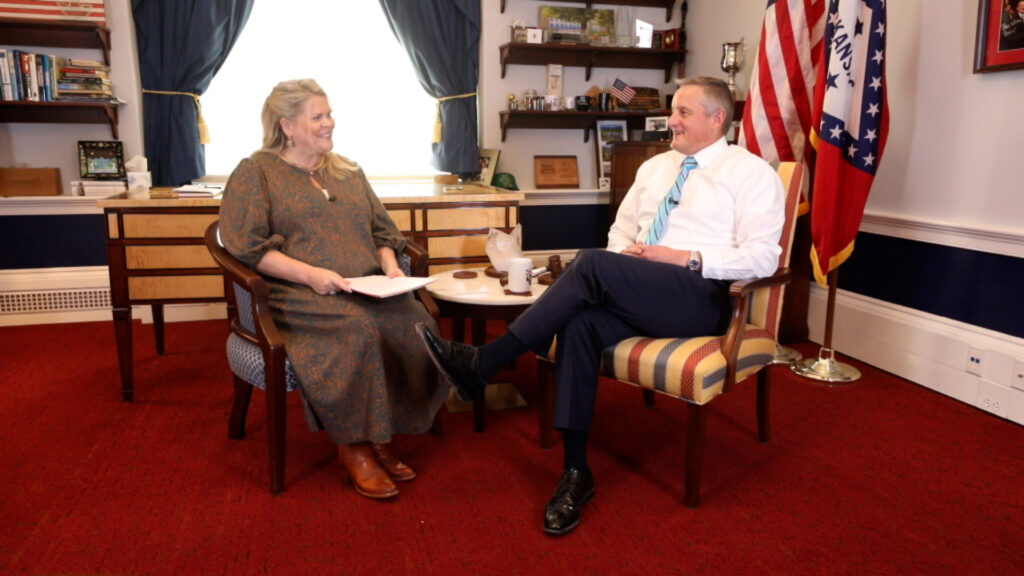
Click here or the image above to view the interview in full.
Read the full transcript below:
CRES PRESIDENT AND CEO HEATHER REAMS: Hey, I’m Heather Reams. I’m president and CEO of Citizens for Responsible Energy Solutions, and I am here with the Chairman of the House Natural Resources Committee, Bruce Westerman. Hello.
CHAIRMAN BRUCE WESTERMAN: Hey, Heather Reams, great to be with you.
REAMS: Great to be with you. So you are a CRESponsible leader this month. Congratulations.
WESTERMAN: Thank you. That sounds very important, not sure what I did to deserve that, but thank you.
REAMS: Well, we’re excited by all that you’re doing on permitting reform. It’s exciting because America wants to build, but there’s a lot of bureaucracy in the way.
And you’ve got a bill called the SPEED Act. I’m wondering if you can tell us a little bit about it.
WESTERMAN: Well, the SPEED Act hopefully will inject some speed into the permitting process so that we can build again here in America. The National Environmental Policy Act, or NEPA as you hear it referred to, was a well-intentioned bill from the early 1970s, late 60s version, that hasn’t really been changed in decades.
And it’s been weaponized. It’s been expanded. If we had the chart here that shows the flowchart of NEPA, you would strain your eyes looking at it if it was on a large poster board. It’s so complicated. And as a result of that, it takes four and a half to five years to get a permit to build things now.
That is a huge distraction and wet blanket on investment in infrastructure, energy, even things like doing forestry management, which I care a great deal about. And we’ve got a bipartisan bill that I think we’ve got a chance to get signed into law called the SPEED Act. It will simplify that process. It will keep the environmental protections in place, but it will give a concise and predictable process, which—when I’m talking about process, that’s a very important word, because the Supreme Court recently had a unanimous ruling in the Seven Counties decision, saying that NEPA is a process and cannot dictate outcomes.
Now, it’s been used to dictate outcomes and to create policy. It was never intended for that. So we want to get a good process that’s streamlined, that allows us to build again.
REAMS: So, do you have an example of something that would be improved with the process and that you’ve seen before the committee in testimony or from folks coming to see you?
WESTERMAN: How much time do we have?
REAMS: A lot, I guess.
WESTERMAN: Okay. So yes, the examples almost don’t even sound real sometimes. An easy example: the last runway built at the Atlanta airport. From the time it was announced to the time it was in service was 11 years. It only took 18 months to actually do the dirt work, pour the concrete and open up the runway.
It took nine and a half years to through the permitting process to do that. Now, think about the escalation in cost from the time somebody said, “We need another runway.” But also think about all the lost flights, takeoffs and landings, the passengers, the cost to the airlines, the cost to the public, the delays that could have been avoided with that runway.
Did it do some horrible environmental harm? No. Is it different now than it would have been had they built it right off the bat? No. It’s just a cumbersome process that added cost and time to the project. You can go from that to a mine out in Arizona—that we’re talking decades to get a permit for mines now.
A company finally gets their permit. They spend $2 billion digging a 7,000-foot-deep hole in the ground to get copper out, which we’re in desperate need of more copper in our country as well. They get sued after they’ve spent money. And under the current NEPA process, there’s a six-year window in which somebody can file suit. And the judge did an injunction and stopped the whole project.
The Keystone pipeline’s a famous one. Billions of dollars spent, years and years and years of work, lots of investment. The project was stopped. They even had to go in and pull up some of the pipeline.
REAMS: So this is geographically agnostic in terms of the challenges that we’re seeing. So putting this law into place is going to create more certainty for businesses.
WESTERMAN: That’s the key word: we need certainty. If you’re an investor, you want some certainty. You want to minimize risk. Sometimes you can’t minimize risk, but this is one we can certainly minimize risk. And I will make the point that we can protect the environment even better if we have permit reform than under the current system.
I mentioned forestry earlier. We can’t manage our federal lands because of the NEPA process. The resource management plans always get challenged in court. There’ll be an injunction; at the end of the day, nothing’s happening out on the ground. So then we see these massive forest fires that pollute the air, pollute the water, kill wildlife, damage landscapes—and all of that could have been prevented if we let the land-management professionals do their job. Not sidestep NEPA, but say, “Here’s the plan.” Challenge the plan if you don’t like the plan, but don’t have the ability to go in and stop every single thing that happens.”
REAMS: This makes a lot of sense.
WESTERMAN: Almost makes too much sense.
REAMS: The intent of the law over time has really gotten diluted. You mentioned bipartisan, and I think that’s an important part of getting some durable policy done.
So, do you think Republicans and Democrats are coming together for a bill like this?
WESTERMAN: We’ve got to, and we are coming together. And it’s got to be bipartisan because it’s got to get 60 votes in the Senate. And it’s really been fun working with the whole coalition—whether that’s Republicans and Democrats in the House, with the whole Congress, with the administration, and all the many stakeholders who are out there.
I think it’s what policy should be. It can be frustrating. It takes a long time. But this could be very rewarding if we get it right. And I say we have to get it right because we’re in a race for AI. AI requires a lot of energy. The projections on how much electrical energy in particular we’re going to need over the next few decades, is eye popping.
I’m talking one of these data centers that I’m familiar with—I’ve got nuclear power plants in my district. One of those nuclear power plants is a gigawatt. But this data center needs three gigawatts of power. So think about three nuclear power plants for one data center.
REAMS: One data center is what we are talking about.
WESTERMAN: And China has doubled our energy production.
I don’t think a lot of people realize it. They’ve not only surpassed us—they’ve got double the amount of energy available as what we have. And then all the other things: critical minerals. There was a Wall Street Journal that reported on the doubling of our energy, also mentioned that they [China] produce 70% of the rare earths and critical minerals and process 90% of them.
REAMS: This is China that does this.
WESTERMAN: China– This is national security we are talking about; it’s economic security, national security. But guess what? God blessed America, we’ve got all of this stuff here. We just have to get it out of the ground and process it. You can’t build a processing plant; you can’t build a refinery. It’s really throwing a wet blanket on our economy, and we stand to benefit greatly. I’ll say economically and environmentally. Nobody does it cleaner and safer. No human-rights violations. All of that here in the United States. And if we’re not doing it here, somebody somewhere else in the world is doing it with much lower standards.
REAMS: So, we really can come out on top for a number of reasons: environmentally, for our country, national security. What about price? I know affordability in energy has become a big issue. If you’ve got demand and scarcity, sometimes price goes up.
WESTERMAN: So I talked about the data centers and the AI; the demand is going through the roof. If we’re going to make more stuff here, the industrial manufacturing is going to require more energy. So, if there’s a scarcity of energy and you’ve got all this competition for it, we know what happens: price goes up. Residential, commercial, everybody’s prices are going to go up if we don’t produce more energy.
But we’ve got the ability to produce more energy and to do it in massive quantities. And it’s got to be all-of-the-above. We need more nuclear. We need more hydro. We need more gas. I say we need more coal, more wind, more solar, anything that’s putting electrons on the grid. And by the way, we need to expand the grid. But guess what blocks us from expanding the grid?
REAMS: Hmm let me think.
WESTERMAN: Drumroll…
REAMS: Permitting reform.
WESTERMAN: Permitting.
REAMS: Permitting issues, right.
WESTERMAN: We can’t get new power lines permitted.
So it all works together. And again, it comes back to national security. But there’s a positive story in here too. If we do what America normally does; and what was it that Churchill said, “After exhausting all other possibilities, Americans usually do the right thing”? Hopefully it won’t get that bad, but we’re really up against a wall right now
If we start growing our economy and responsibly using our resources, that’s going to be, not only more jobs, but better-paying jobs. It creates more opportunities for people to go to work. We have a very low labor participation rate in our country right now. I’ve read economic reports that say for every 1% increase in the labor participation rate, it generates $1 trillion to our economy, to our GDP.
REAMS: That’s real money
WESTERMAN: And well think about this: historically, the past 50 or 60 years, 15 to 16% of the GDP ends up in federal tax revenue. So if we get 1% increase in labor participation, that’s $150 to $160 billion a year of more revenue to go toward our debt and our deficit.
You look at rare earths and critical minerals, there’s a huge multiplier from taking them out of the ground to processing them to manufacturing from them. To the account of like, if something is worth $1 when you take it out of the ground, by the time it gets into a manufactured product, it’s worth $35 to $40. And we’re talking about billions of dollars of stuff we can take out of the ground and trillions of dollars of economic impact.
REAMS: And doing it responsibly, as well.
WESTERMAN: And keeping the environmental safeguards in place.
NEPA has evolved from protecting the environment to protecting special interests.
REAMS: That’s a big statement, but we’re seeing it every day. If you’re talking about not being able to build, not being able to compete internationally, our national security.
Americans may not really understand all the implications of how important a bill like the SPEED Act is. Are there other pieces of the SPEED Act? Is it one bill that’s going to solve everything, or is the SPEED Act part of a number of bills that need to come together?
WESTERMAN: That’s a good question. And the answer is yes.
REAMS: So it’s complicated.
WESTERMAN: If there’s one thing we desperately need to do, it’s pass the SPEED Act, which is reforming the NEPA process. So, when you talk about other permitting legislation, you have underlying statutes like the Clean Air Act, Clean Water Act, Endangered Species Act, Marine Mammal Protection Act, Historic Preservation Act.
You’ve got FERC and NERC and all these agencies that fall in the permitting realm. NEPA is a process that looks at all of those and says: it checks the boxes. So If you get NEPA where it works, it makes it easier to analyze the underlying statutes. There need to be changes to some of these underlying statutes. A lot of them came along with or shortly after when NEPA came along. And there have been very few changes in those as well.
So, I think my idea of really successful permitting reform is, number one, the SPEED Act, and then whatever bipartisan tweaks we can agree to on those underlying statutes that are a lot of times just common sense.
REAMS: And what about anything that has been permitted before? We’ve seen some pullback over the years. These companies have worked very hard to get that permit. It takes a long time, as we’ve been talking about, and then it’s removed or it’s rescinded. Is that something any of these bills will address?
WESTERMAN: Yeah. And that’s what I call the ping-pong effect. So it seems like every time the administration changes, somebody hits the ball back on the other side of the table.
REAMS: Exactly.
WESTERMAN: This is something you hear a lot from my friends across the aisle right now: “The Trump administration canceled these permits or pushed back on this project.” And I say, “you know what? Eighteen months ago, I would have said the same thing about the Biden administration.”
Putting obstacles in the way, and again the current process is four to five years, which is longer than a single presidential administration. This is why Congress needs to step in and say, we’re going to fix this so somebody has certainty when they go through the permitting process, regardless of which administration they’re going through the process under. That’s the whole goal: bring certainty.
That’s a big issue that we’re debating as we get up to the final markup on the bill to pass it out of the Natural Resources Committee.
REAMS: The bipartisanship really matters when you’re thinking administration to administration, and it really does highlight the role of Congress, and of course your leadership.
Is there a timeline that you hope to see for passing the SPEED Act and working toward a bipartisan solution?
WESTERMAN: Well, we’re constantly working toward a bipartisan solution. Had we not had the shutdown, we would have probably already passed it out of committee.
But I will say if you’re looking for silver linings, the shutdown allowed me and others more time to go through the details of the text with a fine-tooth comb. We got a lot of feedback from other members. We worked with the Senate. We’ve been working with the administration. As we’re recording this, we’re still negotiating over text, but it’s to the point where I had time during the shutdown to sit down with my committee staff and talk about “is this is the right word or should it be another word?” That granular of detail.
REAMS: And the luxury of time.
WESTERMAN: Yeah, which is a premium here.
REAMS: Right.
WESTERMAN: Especially when you’re working on legislation.
So I’m very excited about the robustness of the text. We’ve still got to get everybody on the same page. But I hope to have it in the Senate before the end of the year, with the Senate having plenty of time to do something and act on it.
REAMS: So, your crystal ball—are you thinking maybe we see something in this Congress, in terms of before midterm elections
WESTERMAN: Oh, my optimistic self is saying before January 1, 2026, we see something.
REAMS: Wow. Fantastic.
WESTERMAN: I feel very confident we’re going to see action by the House before the end [of the year]. I have no control over the Senate. We try to work with them as much as possible, so that’s why we rely on others to go talk to their senators.
REAMS: We’ll do that
WESTERMAN: The Senate has a genuine interest in this. It’s not like they’re not working on it or aren’t interested in it. But I can’t stress enough: it takes 60 votes in the Senate. You can’t fix it with a reconciliation bill or something.
REAMS: Right, which needs less, it needs just a simple majority in the Senate with reconciliation. So that’s 60 votes, which makes it filibuster-proof. Right?
WESTERMAN: Right. So we want to get as much Democrat support in the House and as much Republican support and show that we’ve got a strong bipartisan bill being transmitted over to the Senate. You know, give them a strong starting point to do whatever magic the Senate can do.
REAMS: Well, that’s incredible. Thank you so much for your hard work. No wonder you’re a CRESponsible leader. You should get that almost every month.